Biography
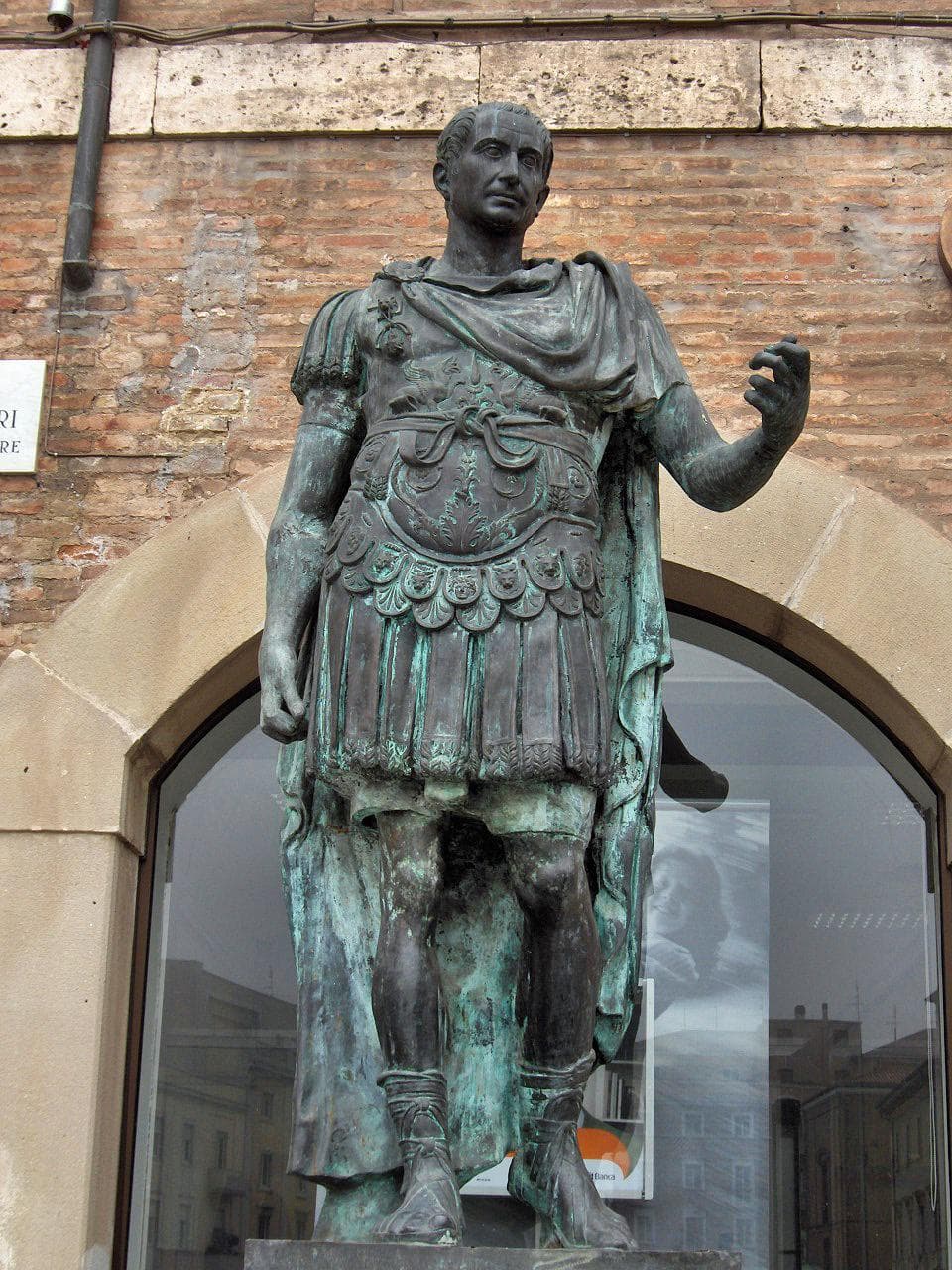
Gaius Julius Caesar (100–44 BC) was a Roman general and statesman who played a pivotal role in the events that led to the end of the Roman Republic and the rise of the Roman Empire. Born into the patrician Julian family, he fled Rome during Sulla's proscriptions and began his military career, quickly distinguishing himself through courage and strategic brilliance.
Caesar's conquest of Gaul (58–50 BC) stands as one of history's greatest military campaigns. He subjugated the entire region of modern France and Belgium, crossed the Rhine into Germany, and led two expeditions to Britain. His Commentarii de Bello Gallico remains a classic of military literature and historical documentation.
In 49 BC, Caesar crossed the Rubicon River, igniting a civil war against his rival Pompey the Great. After a stunning series of victories, he pursued Pompey to Egypt, where he became entangled in Egyptian politics and supported Cleopatra VII. Upon returning to Rome, he was appointed dictator for life and implemented sweeping reforms, including the Julian calendar, land redistribution, and administrative reorganization.
Caesar's growing power alarmed republican traditionalists. On the Ides of March (15 March) 44 BC, he was assassinated by a group of senators led by Brutus and Cassius. His death, however, did not save the Republic—it instead triggered more civil wars that ended with his adopted heir Octavian establishing the Roman Empire.
Caesar's legacy is monumental: his name became synonymous with imperial rule (Kaiser, Tsar, Caesar), his calendar reforms shaped modern timekeeping, and his military writings continue to be studied. He remains one of the most famous and influential figures in world history.
"Veni, vidi, vici. (I came, I saw, I conquered.)"
—— 致罗马元老院的战报